I am a film fan. When I wanted to test what AI could do beyond a chat window, I chose content I know well enough to judge every result: films. Sightlines is the result, a guide to 3,400 important and popular films, chosen from the canon, from international cinema, from the films that influenced them, and from what people are watching now. Knowing the material meant I could tell when the AI was right, when it was merely plausible, and when it was wrong, and design around all three.
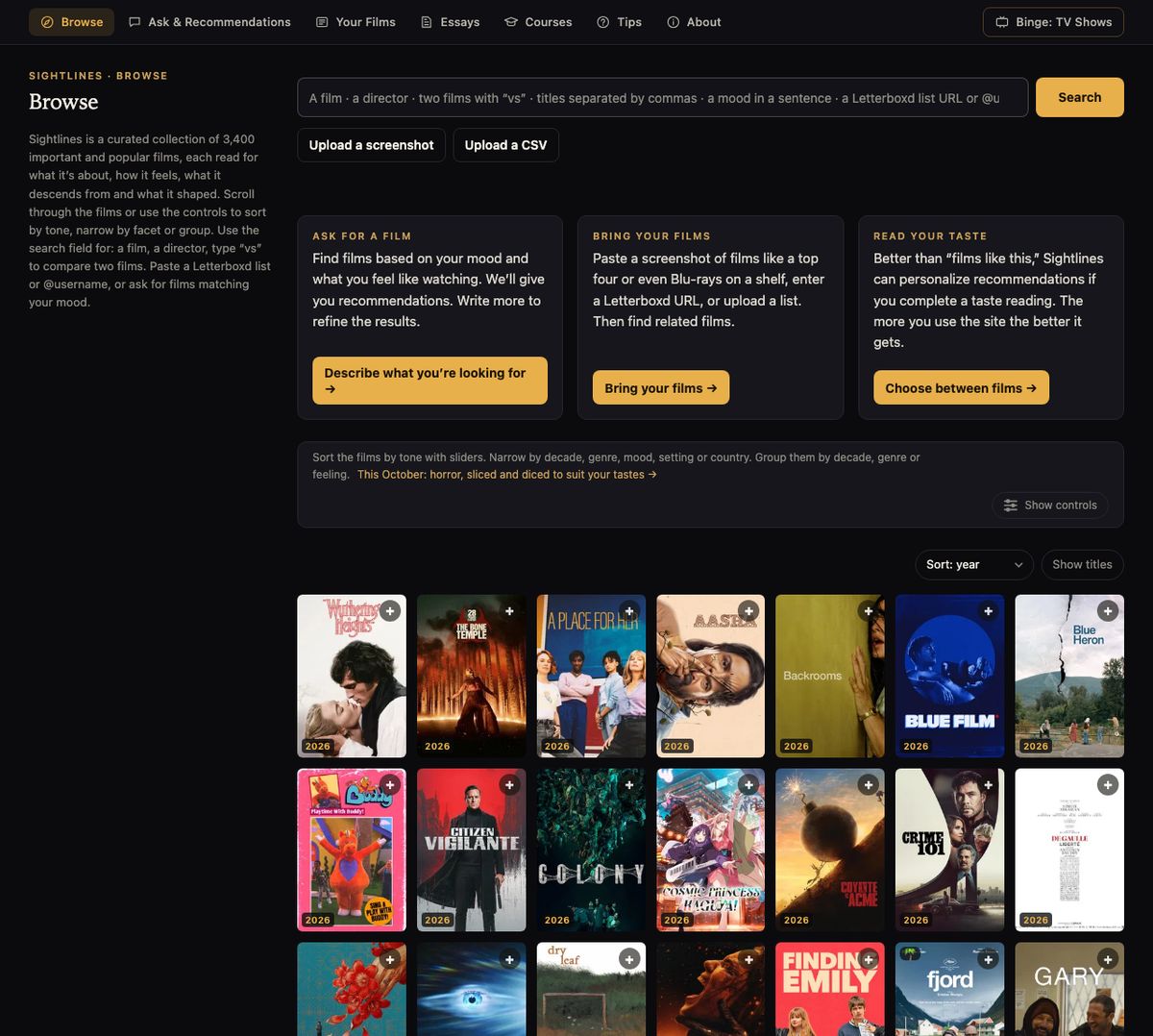
Content generated for every film
Most film sites list the same facts: cast, runtime, genre, rating. Sightlines generates a reading of each film:
- The film page: what the film is about, the experience of watching it, its performances and its craft (cinematography, editing, staging, sound), then its production, technique, genre, the director's method, the movement it belongs to, its themes and its place in film history.
- Mood statements that say how the film will make you feel, and when it is the right choice: "for when you want a serious, immersive crime saga."
- Lineage: the films it descends from and the films it influenced, with a line on what carries over from one to the next.
- Reception from release to reputation now, and a theory reading through Gilles Deleuze's cinema books, with a linked glossary.
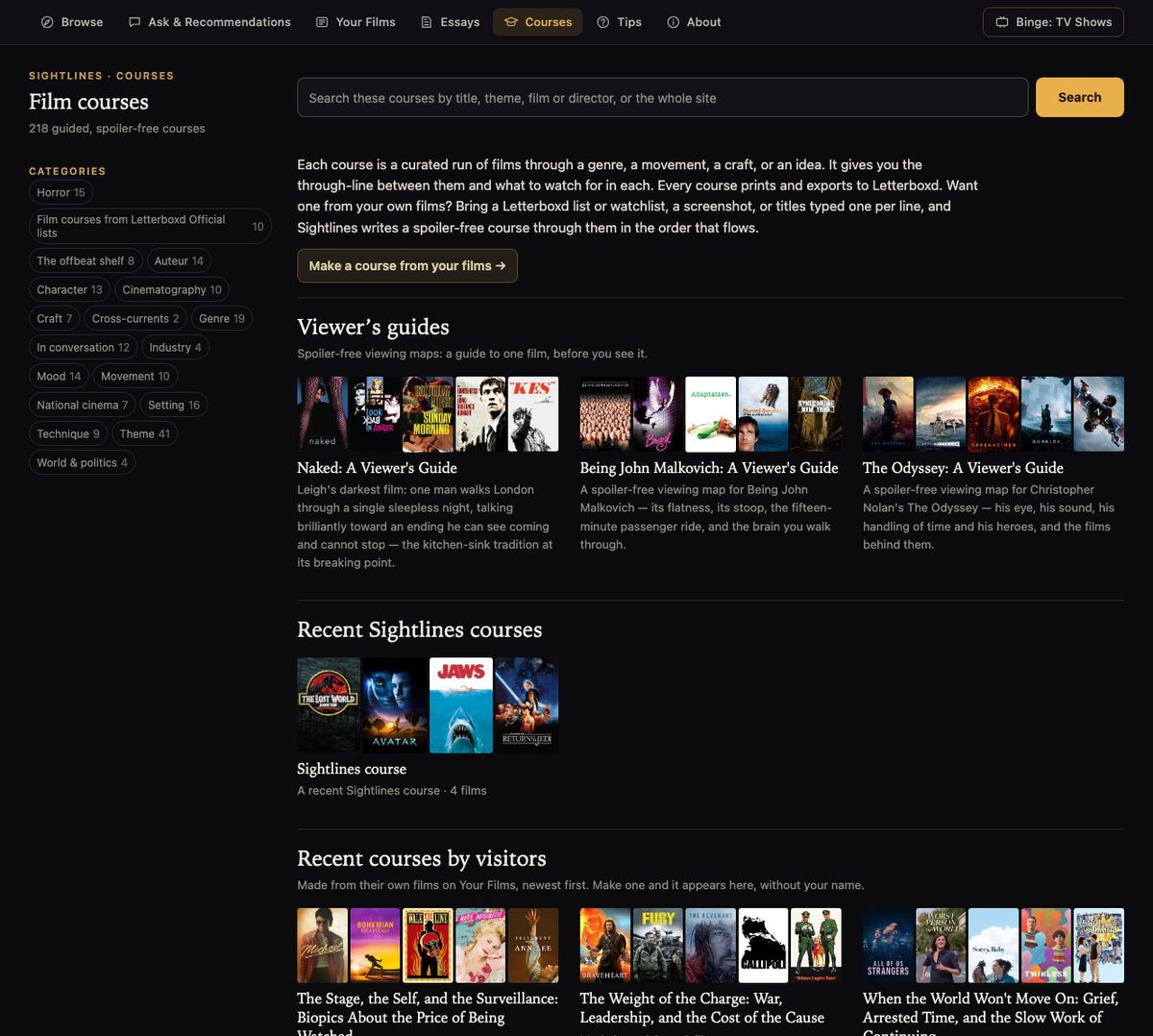
- 136 film essays and 200 spoiler-free film courses, and more than two hundred curated runs of films that belong together.
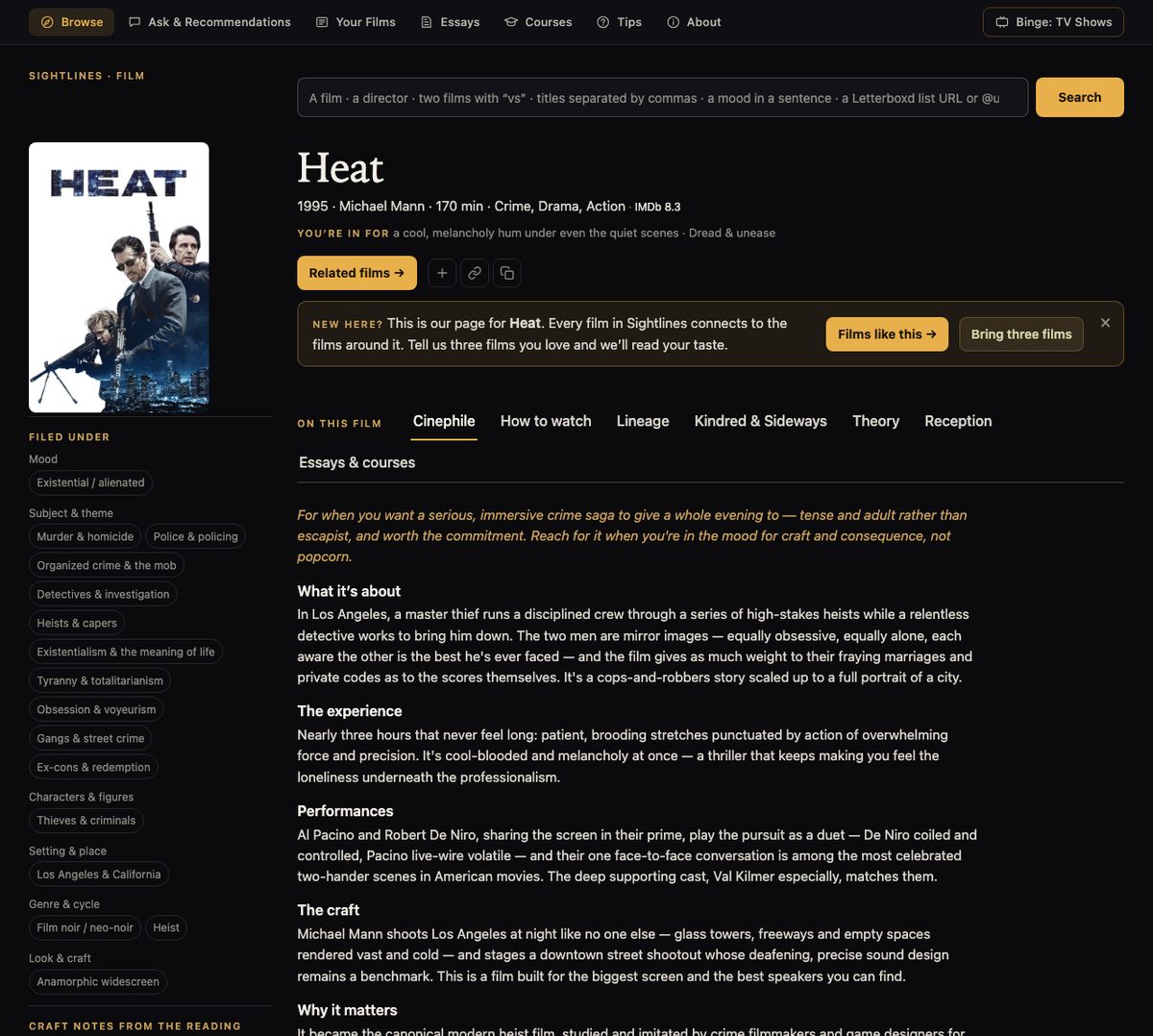
Navigation designed around how people choose films
People rarely choose a film by genre code. They choose by mood, by a film they loved, by a director, by a feeling they want. The navigation follows that:
- Ask in your own words. "A quiet film about grief that ends with some hope." "Tense and beautiful for a Friday night, nothing gory." The answer comes back as films, each with a reason, and narrows when you say more.
- Start from a film. Name one and get the films around it, ranked by closeness, marked as ancestors, siblings or members of the same run. Type "Heat vs Collateral" to compare two films on the tone sliders.
- Narrow by facets far finer than a typical film site's: decade, genre, mood, subject, setting, technique, movement, national cinema and country, each showing how many films it leaves.
- Sort by tone with eleven sliders, from warm to menacing, funny to serious, slow-burn to frenetic. This October, a horror row slices the season's films by subgenre and five fear dials.
Taste, not "films like this"
The recommendation design is built on the idea that taste is a set of distinctions, not a list of favorites. Visitors bring their own films: a Letterboxd list or username, a Reddit thread, a CSV, or a screenshot of their top four or a shelf of Blu-rays. Sightlines then writes a taste reading in plain words: what you go to films for, the tone you take, how you like a film shot and written, each claim backed by the films behind it and paired with films to try next.
The reading sharpens through choices. Sightlines puts two films from the same genre side by side, films that differ in one quality, and asks which you would rather watch. Each choice refines the reading and moves its recommendations. Every claim in the reading can be answered: That's right, Not me or Say more. A rejected claim stops steering recommendations, and the next choices probe what you meant. Films can go to a watchlist, your films can be grouped into the curated runs they belong to, and you can have a short, spoiler-free course written from the films you brought.
The system behind it
I designed and built Sightlines with Claude. New films come in through an intake pipeline that generates each film's reading, lineage, reception and theory, along with two descriptive layers: one of objective descriptors, and one of affect, what a viewer feels, seeks and is left with, which is where the mood statements come from. Associations between films (related films, curated runs, companions, bridges between taste territories) are computed ahead of time, so most of the site runs without a live model call, and the AI that does run live (Ask, taste readings, courses) is metered against daily caps.
The site serves nearly 14,000 pages, including a "how to watch" guide for most films, and runs from admin consoles of my own design: live visitor journeys, a feed of what people explore, model costs by purpose, and filters that keep crawlers out of the numbers.
What it shows
Sightlines is a case study in using AI for a user experience rather than a chatbot. The AI generates content a human editor would struggle to produce at this scale, and the design decides how people meet it: through moods, comparisons, lineage and their own taste, sharpened by choices rather than ratings. The same approach works for any catalog people choose from (books, music, courses, products, collections), and it is the kind of system I can design and build for a client. Ways to work together →